*This is reposted from one of my older BLOGs. Also, adult language is included, please be aware.
I had to write this for my Film Theory class, and enjoyed it so much, I thought I'd share it with you, readers!
Please know that it is four pages, double spaced, so it will take a little while to get through. But I'll put some pictures in to break it up. Also, please note that I cut my comparison between the experience of theater for an audience versus the experience of film to shorten the page count, but I could easily go on. And may later on... Hope you enjoy!
Initially, when I began fleshing out my opinions of art as they apply to the cinema, I was reminded of a pivotal time in my theater career when funding for the “arts” was being cut from public schools. It was junior year of high school (approximately 1997), and I had just begun to tackle community theater as well as our rigorous high school productions. Luckily, I had time for both because we were able to do work on our productions during theater class time. We were asked to write letters, petitioning to the state to not eliminate classes for the arts. If work could only be done after school, we’d either loose valuable sleep or do a subpar job. It’s amazing how hard teenagers will fight to be able to slave over something they feel passionately about.
The above is a definitive high school theater mentality, especially during "hell week".
Later as a young adult, I explained this plight to a friend, who promptly responded that taxpayers shouldn’t be supporting attention-starved teenagers who just end up getting “real” jobs anyway. As the daughter of a professional actor and an educator, who thrive on public speaking and presentation, I was appalled. Is this how the layman sees the arts? A waste of money?
As a result, I began to philosophize about the function of science in society versus the function of art, and yes, I did so long before this class. This may sound very high-brow, but the truth is, I was looking for a simple answer that reflected my own experience in theater; functional and inspirational.
Here’s what I came up with: “Science is the fine art of answering questions. Art is the science of questioning.” If we don’t allow ourselves to question, then there is no room to grow, or invent, or discover. I always like using the example of the original Star Trek series. Long-range personal communicators had never been seen before Star Trek, and in the 60’s, it sparked the question – can we make those? How would we use them? Who would use them? Decades later, cell phones are almost mandatory, and those questions, from the creativity of a science fiction television show, are now answered.
As if you didn't pretend your first flip-out phone was a Star Trek communicator. Please.
If that was not evidence enough for my skeptical friend, then I’d like to add that Gene Rodenberry, who created Star Trek, served in World War II and was a police officer for the LAPD for years before Star Trek ever aired. It is more likely, in fact, that “normal” people just have something to say, and find a way to express it.
*There is a great quote from a recent film "Anonymous" (2011), when Ben Johnson meets Oxford for the first time and Oxford explains that all art (and writing) is political because all artists have something to say. You'll have to watch the movie to see/hear the quote.
But I think that very simple definition of art also simply explains the purpose of art in society – to make us question. Through art, we are made to question ourselves, our perceptions, our morals, and our priorities. So, while it is arguable that Star Trek might not be the most cinematic or “beautiful” expression of a possible future, it certainly did implore its audience to think and to question.
But perhaps these “questions” seem more relative to the “fine arts”: sculpture, painting, literature, each seemingly only evoking higher ideals. Or so we assume. Isn’t film made for the entertainment of the same layman who thought it was a waste of money to train the youth who would become filmmakers? O, so ironic.
*By the by, this same jackass tried friending me on Facebook recently. Some people, I tell ya...
There should be a distinction made, however, between the artistic ability to present something – a scene, a person, an ideal – and the fully expressed art form that is film. I believe the balancing factor between the artistic execution and the art form is entertainment. Entertainment, from the artist’s viewpoint, means that the “art” was created with the audience in mind. Entertainment, from the audience’s viewpoint, means that the “art” is an original presentation of old information; a sort of comfort zone where the audience can enjoy the technical skill (which is part of the definition of “art”) without the highbrow concepts interfering with its “entertainment value”. If a film is to become a form of art (not just expressed artistically), then it must allow the artist’s intentions to out-weight the artist’s need to “entertain”.

This film was discussed in class because it is extremely artsy, but does it loose its entertainment value because there is not enough story for the audience to relate to? I say no.
This is very similar to the balance between art and science I theorized about earlier. It is not a black and white distinction, but rather – entertaining films can be artistic and art films can have commercial value.
However, it could also be stipulated that because film synthesizes so many aspects of the other arts, that if one aspect is employed that audiences enjoy, the whole will, thus, be entertaining. For example, someone may say they don’t like foreign films, but they love dance in film, so a film about Russian ballet would still be “entertaining” for them. Also, by virtue of the fact that film can do some things other arts do and also employ techniques that other arts cannot, the “art” of film is unique, and thus, entertaining. The same ability to become immersed into a fictional world in theater because of sets, costumes, and acting is amplified with locations and the ability to come closer to actors in film.
My boyfriend was inspired to read the Lord of the Ring series after obsessing over the movies, but even with the details of the books, he prefers the vision and the excitement of the films.
As I have a strong theater background, I would argue that theater is unparalleled with its ability to express fictional, narrative stories. But, perhaps that is because when deciding how to present theatrical productions, a director must remember that the audience is an interactive part of the performance. With film, a baby crying, or a lady laughing a little too long does not interrupt a director's vision. With theater’s single, stationary audience perspective, the “artist” must engage the audience in creative ways so that they continue to “suspend reality”. It could be said that film requires the audience to suspend reality moreso than theater, because we do not see forty-foot faces in reality. But emotionally, film duplicates a human experience more accurately. In theater, instead of a close-up, we’d make the stage dark and put a spotlight on the single actor, but we still have to relate to the actor at a distance. Not realistic. But regardless of the criticism of film as an art form, whether it be more entertaining or more artistic, if it evokes emotion, then it is effective.
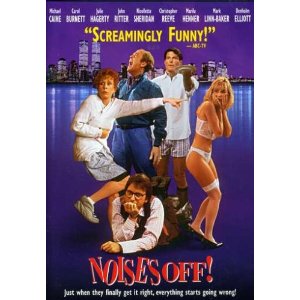
The film, while entertaining, does not do justice to the energy and performance the stage can provide. Of course, theater enthusiasts still enjoyed the film ;-)
Interestingly enough, as much as film has become the most recent art form, a friend of mine did her senior thesis at University of Texas in Austin about how comic books will become the new modern art form because they read like storyboards of a film. And as we know from class – the human mind has a way of “filling in the gaps”. People can now read films through comic books. Talk about irony.


